DR. MANUEL PERALTA
PLASTIC SURGEON

Liposuction Dominican Republic — Topographic Sculpting with Dr. Manuel Peralta
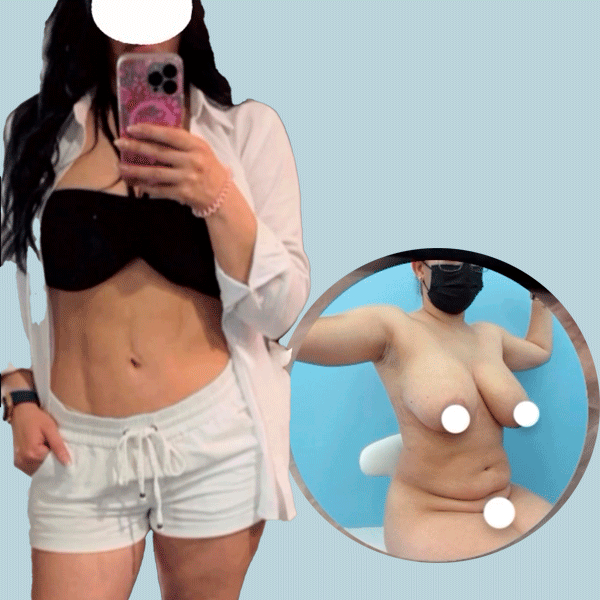
Liposuction Dominican Republic patients who achieve the most compelling results share a common experience: the procedure did not just make them smaller. It made them look structurally different more defined, more proportionate, more themselves.
That outcome is not a product of removing more fat. It is a product of removing the right fat, from the right zones, at the right depth, in the right sequence while preserving the natural contrasts between body surfaces that create the visual perception of definition and shape.
Dr. Manuel Peralta’s approach to liposuction Dominican Republic surgery at CECILIP treats fat not as a uniform material to be extracted, but as a three dimensional landscape with specific zones of strategic importance. The procedure is designed as topographic sculpting not simple volume reduction.
Why Fat Is Not Uniform — The Topography That Determines Your Result
The first clinical reality that most liposuction Dominican Republic content ignores is that fat tissue is not the same everywhere in the body. Different fat deposits have different characteristics that directly affect how they respond to liposuction and what the result looks like after treatment
Superficial vs. deep fat compartments
Fat exists in two distinct layers relative to the overlying skin: the superficial compartment immediately beneath the skin and the deep compartment, which sits above the muscular fascia. These two compartments behave differently during liposuction and contribute differently to body contour.
Deep fat removal reduces overall volume and bulk. Superficial fat removal refines surface texture and definition. The most precise liposuction Dominican Republic results require attention to both compartments the proportion of removal from each determines whether the outcome is merely smaller or genuinely sculpted.
Fibrous vs. fatty tissue
Some areas of the body contain fat that is densely interwoven with fibrous connective tissue the lateral thighs, the male chest, and the upper back are examples. This fibrous fat requires different cannula selection, more deliberate technique, and higher energy application than the softer, more mobile fat of the abdomen and flanks. A single technique applied uniformly across all areas produces inconsistent results.
Vascularity variation
Fat in highly vascular zones bleeds more during treatment, requires more careful fluid balance management, and heals with different timelines than fat in less vascular areas. Dr. Manuel Peralta’s tumescent technique is calibrated to each treatment zone not applied at a standard concentration across the entire body.
The Contour Map — How Dr. Manuel Peralta Plans Every Liposuction Procedure
Before any liposuction Dominican Republic procedure at CECILIP, Dr. Manuel Peralta performs a contour analysis a systematic mapping of the patient’s fat distribution in three dimensions.
This analysis identifies:
Primary volume zones areas of excess that reduce overall bulk and represent the majority of fat to be removed
Transition zones the boundaries between treated and untreated areas, where the degree of removal must taper smoothly to prevent visible step offs or depressions at the edge of treatment
Definition zones areas where strategic, selective fat removal will enhance the visibility of underlying anatomical structures the waist, the oblique lines, the anterior thigh crease, the lateral deltoid shadow creating the appearance of muscle definition without over treatment
Preservation zones areas where fat must be left deliberately to maintain natural contour, prevent skin irregularity, and ensure the treated zones transition smoothly into untreated anatomy
The contour map produced during consultation is the surgical plan. It is specific to each patient’s anatomy and goals not a standard treatment protocol applied uniformly to an area based on its name alone.
Standard Liposuction vs. High-Definition Liposuction — A Clinical Distinction
Liposuction Dominican Republic patients frequently encounter these two terms without a clear understanding of what distinguishes them clinically. The distinction is not marketing it is a genuine difference in surgical intent and technique.
Standard liposuction
Standard liposuction addresses the deep and mid fat compartments to reduce overall volume and bulk in the treated area. The goal is a smaller, smoother contour. It is the appropriate technique for patients seeking volume reduction, proportional improvement, and waist to hip ratio enhancement without specific muscular definition.
Standard liposuction is the most frequently performed technique at CECILIP and produces excellent results for the majority of liposuction Dominican Republic patients seeking body contouring.
High definition liposuction
High definition liposuction also called VASER Hi Def or etching adds the superficial fat compartment to the treatment zone. By selectively removing fat from immediately above muscle groups, it enhances the visual contrast between muscle bellies and creates the appearance of athletic definition visible abdominal muscles, shoulder definition, arm musculature.
High-definition liposuction requires specific patient candidacy: sufficient muscle mass to benefit from surface definition, low residual fat volume in the treatment area, and excellent skin elasticity to retract smoothly over the newly defined surface. It is not appropriate for every patient, and Dr. Manuel Peralta evaluates candidacy for this approach specifically during consultation.
The most important distinction: high definition liposuction does not create muscle. It reveals muscle. Patients without sufficient underlying muscle mass will not achieve the athletic appearance this technique is designed to produce regardless of how aggressively the superficial fat is treated.
Skin Retraction — The Variable That Determines Candidacy
One of the most clinically significant factors in liposuction Dominican Republic outcomes and one of the least discussed in patient facing content is skin elasticity.
When fat is removed from beneath the skin, the skin must retract to conform to the new underlying contour. Whether it does and how completely is determined by the skin’s elasticity, which varies substantially by patient age, prior skin stretch from weight changes or pregnancy, sun damage history and genetics.
Patients with good elasticity typically younger patients or those without significant prior skin stretch achieve the most dramatic contour improvement from liposuction alone. The skin retracts tightly over the treated area, conforming smoothly to the new contour.
Patients with moderate elasticity who have experienced some skin stretching but retain reasonable recoil achieve good results with appropriate technique. Dr. Manuel Peralta’s approach to these patients includes deeper plane treatment and specific compression protocols designed to support maximum retraction.
Patients with poor elasticity typically those with significant prior stretch, older patients, or those with post-massive weight loss skin may not achieve satisfactory results with liposuction alone. In these cases, a skin removal procedure tummy tuck, arm lift, thigh lift may be indicated alongside or instead of liposuction. Dr. Manuel Peralta evaluates skin quality during every liposuction Dominican Republic consultation and provides an honest assessment of what liposuction can and cannot achieve for each patient’s specific skin.
What Liposuction Cannot Fix — Clinical Honesty That Builds Trust
The most credible liposuction Dominican Republic consultation is one that addresses the procedure’s limitations as honestly as its capabilities.
Liposuction does not address skin laxity Fat removal and skin tightening are separate problems requiring separate solutions. Liposuction removes fat beneath the skin it does not tighten the skin above. Patients whose primary concern is loose or sagging skin require a procedure that addresses the skin layer directly.
Liposuction does not eliminate cellulite Cellulite is a structural condition of the superficial fat compartment and the fibrous septae connecting it to the overlying skin. Standard liposuction does not treat the septae and does not reliably improve cellulite. In some cases, aggressive superficial liposuction can worsen the appearance of cellulite by creating surface irregularity.
Liposuction is not a weight loss procedure The volume of fat safely removable in a single liposuction session up to 5 liters of total aspirate does not produce meaningful scale weight change for most patients. The benefit is contour, proportion, and distribution not weight reduction. Patients whose goal is weight loss are best served by addressing that goal before considering liposuction for contouring.
Liposuction does not prevent future fat accumulation Fat cells removed through liposuction do not return to the treated area. However, significant weight gain after liposuction will expand remaining fat cells both in the treated areas and elsewhere. Maintaining a stable weight after liposuction Dominican Republic surgery preserves the result long term.
The Tumescent Technique — Safety and Precision Combined
Every liposuction Dominican Republic procedure at CECILIP is performed using the tumescent technique the infiltration of a precisely calculated solution of saline, lidocaine, and epinephrine into the treatment areas before fat removal begins.
The tumescent technique serves three concurrent functions:
Hemostasis Epinephrine constricts blood vessels in the treatment zone, dramatically reducing blood loss alongside the aspirated fat. This is what makes modern liposuction safe at volumes that would have been dangerous with earlier techniques.
Anesthesia Lidocaine provides local anesthesia throughout the treatment area, reducing the general anesthesia requirement and contributing to post operative pain management.
Tissue preparation The fluid swells and firms the fat compartment, making it more accessible to the cannula and enabling more precise, consistent movement through the tissue.
Dr. Manuel Peralta calculates tumescent fluid volumes individually based on treatment area surface, estimated aspirate volume, and the patient’s weight before surgery begins. This calculation is not approximated. It is clinically determined and documented for every case.
Recovery — What to Expect After Liposuction Dominican Republic
Days 1–3 Maximum swelling, bruising, and tightness in the treated areas. Most of the discomfort comes from the tumescent fluid still present in the tissue. Compression garments applied in the operating room are worn continuously.
Week 1–2 Fluid begins to redistribute and clear. Swelling remains significant but begins to reduce. Light movement is encouraged from day 1. Most patients are mobile and comfortable enough for short walks within 48 hours.
Week 3–4 Visible improvement becomes apparent as acute swelling resolves. Contour changes are emerging. Compression continues. Light daily activity resumes for most patients.
Month 2–3 The majority of swelling has resolved. Contour results are approximately 80% visible. Skin retraction is progressing.
Month 6 Final result established. Remaining skin retraction complete. Scars from cannula entry points small, strategic punctures rather than incisions have faded to barely visible marks.
International patients are typically cleared to fly home after 7–10 days the shortest in country recovery period among Dr. Manuel Peralta’s common procedures.
Frequently Asked Questions — Liposuction Dominican Republic
What areas can liposuction treat?
Dr. Manuel Peralta performs liposuction on the abdomen, flanks, waist, lower back, inner and outer thighs, posterior thighs, arms, chest and submental area (under the chin). Multiple areas can be treated in a single session within safe volume limits. The contour map developed during consultation identifies which areas will produce the most meaningful results for each patient’s specific goals.
How much fat can be removed in one session?
The internationally recognized safe threshold for outpatient liposuction is a total aspirate fat plus fluid of no more than 5 liters. Cases requiring larger volume are staged across multiple sessions or managed with inpatient monitoring. Dr. Manuel Peralta never exceeds safe volume parameters regardless of patient requests.
What is the difference between standard and high definition liposuction?
Standard liposuction addresses deep and mid fat compartments to reduce volume and improve contour. High definition liposuction additionally treats the superficial compartment to enhance the visual contrast between muscle bellies creating athletic definition. High definition requires specific candidacy: adequate muscle mass, low residual fat, and excellent skin elasticity. Dr. Manuel Peralta evaluates candidacy for each approach during consultation.
Will my skin tighten after liposuction?
Skin retraction after liposuction depends on your skin’s elasticity determined by age, prior skin stretch, genetics, and overall skin quality. Patients with good elasticity achieve the most complete retraction. Patients with poor elasticity may need to combine liposuction with a skin removal procedure for optimal results. Dr. Manuel Peralta assesses skin quality during consultation and provides an honest recommendation.
Does liposuction treat cellulite?
Standard liposuction does not reliably improve cellulite and can worsen its appearance if performed aggressively in the superficial compartment. Cellulite is a structural condition of the fibrous septae connecting superficial fat to overlying skin a different problem than volume excess. Dr. Manuel Peralta addresses this distinction transparently during consultation.
How long do I need to stay in Dominican Republic after liposuction?
Most international patients are cleared to fly home after 7 to 10 days. Liposuction has the shortest recommended in-country recovery of Dr. Manuel Peralta’s common procedures. Drain removal, wound monitoring, and compression garment adjustment are completed during this window before departure.
Can I combine liposuction with other procedures?
Yes. Liposuction is frequently combined with tummy tuck, BBL, breast procedures, and Mommy Makeover components. The BBL procedure is itself a combination of liposuction and fat transfer. Combination suitability is evaluated individually based on the patient’s medical profile and the estimated surgical duration.
The Contour You Are Seeking Is an Architectural Decision
Liposuction Dominican Republic at its highest level is not subtraction — it is redesign. The zones treated, the volumes removed, the depths addressed, the transitions preserved — each decision contributes to a result that either looks like careful surgery or looks like your natural body, enhanced.
Dr. Manuel Peralta’s consultation at CECILIP is where that redesign begins — with your specific topography, your goals, and a surgical plan built around what your anatomy can achieve when treated with precision.
Get a free consultation