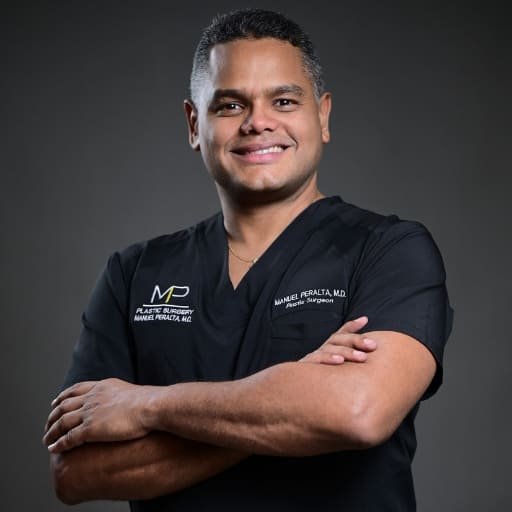
DR. MANUEL PERALTA
PLASTIC SURGEON

Blepharoplasty Dominican Republic — The Anatomy of Looking Tired, and What Surgery Specifically Corrects
When patients arrive at CECILIP requesting blepharoplasty Dominican Republic surgery, they almost universally describe the same complaint: “I look tired even when I am not.”
That experience is not a vague aesthetic impression. It is the subjective perception of a specific set of anatomical changes that have occurred in the periorbital region the area surrounding the eye. Those changes are mappable, their mechanisms are understood, and their correction through blepharoplasty is one of the most consistently satisfying procedures in facial plastic surgery when planned and executed correctly.
Dr. Manuel Peralta’s approach to blepharoplasty Dominican Republic surgery at CECILIP is shaped by his Cleveland Clinic fellowship in facial surgery training in an institution where the periorbital region is treated with the anatomical precision it demands. The eye area contains the highest density of critical structures the lacrimal apparatus, the orbital septum, the levator muscle complex, the lateral canthal tendon of any small region of the face. Operating here requires both surgical expertise and a deep understanding of how modifying one structure affects every adjacent one.
Table of Contents
The Four Structures That Make You Look Tired — A Clinical Map
Understanding what has changed in the periorbital region gives patients the framework to understand what blepharoplasty addresses and what it does not. Four distinct anatomical structures contribute to the “tired” appearance that brings patients to consultation.
Structure 1 The Skin The upper and lower eyelid skin is the thinnest skin on the human body typically 0.5mm, compared to 2–3mm elsewhere on the face. This extreme thinness makes eyelid skin highly susceptible to the elastic degradation that begins in the mid thirties and accelerates with UV exposure, smoking, and genetic predisposition.
As elasticity diminishes, upper eyelid skin folds over itself creating the hooding that can obscure the eyelid platform, reduce the visible aperture of the eye, and in advanced cases, physically impair the superior visual field. In the lower lid, skin laxity contributes to wrinkling, crepiness, and the formation of the skin only folds that differ from true herniation.
Structure 2 The Orbicularis Oculi Muscle The orbicularis muscle encircles the eye and is responsible for eyelid closure. With aging, this muscle descends and its tone changes contributing to lower eyelid laxity and the loss of the sharp demarcation between the lower lid and the upper cheek. The gentle convex curve of a youthful lower lid transitions, with age, into the convex concave double curve lid bag followed by tear trough depression that patients recognize as the most aging feature of the periorbital region.
Structure 3 The Orbital Fat Three fat compartments exist within the upper orbit and three in the lower orbit, contained by the orbital septum. With age and in some patients, by genetic predisposition rather than age at all the orbital septum weakens and the fat herniates forward, creating the characteristic puffiness beneath the lower lids and the medial fat pad fullness of the upper lids.
This fat herniation is the primary clinical cause of under eye bags. It is not caused by fluid retention, poor sleep, or nutrition it is a structural, anatomical change that no topical product or lifestyle adjustment corrects.
Structure 4 The Orbital Septum The orbital septum is the fascial layer that keeps orbital fat contained within the orbit. As this structure weakens with age or in patients with genetic predisposition, from an earlier point in life fat migrates anteriorly. The resulting periorbital fullness distorts the three dimensional contour of the lower lid, creating shadow and projection where youthful anatomy had smooth transition.
Upper vs. Lower Blepharoplasty — Two Different Problems Requiring Different Solutions
Blepharoplasty Dominican Republic surgery encompasses two anatomically distinct procedures that are frequently performed together but address entirely different structural problems.
Upper Blepharoplasty
Upper blepharoplasty addresses excess skin and, when present, herniated medial fat pad fullness in the upper eyelid. The procedure creates a precise skin excision removing the minimum amount of skin necessary to eliminate hooding while preserving the eyelid platform visible above the lash line and maintaining sufficient skin for complete, comfortable eye closure.
The most common technical error in upper blepharoplasty over excision of skin produces a hollowed, operated appearance and, in severe cases, lagophthalmos: incomplete closure of the eyelid with associated corneal dryness and exposure risk. Dr. Manuel Peralta’s Cleveland Clinic training specifically addresses the conservative skin excision principles that prevent this complication.
Upper blepharoplasty incisions are placed in the natural upper eyelid crease the resulting scar is invisible when the eye is open and extremely subtle when closed.
Lower Blepharoplasty
Lower blepharoplasty addresses fat herniation, skin laxity, and orbicularis redundancy of the lower eyelid. The surgical approach varies based on the specific combination of problems present:
Transconjunctival approach Incision placed inside the lower eyelid, leaving no external scar. Appropriate for patients with fat herniation as the primary concern and adequate skin elasticity that will retract without direct skin excision. Dr. Manuel Peralta’s preferred approach for younger patients with predominantly fat related lower lid bags.
Transcutaneous approach External incision placed immediately below the lower lash line, providing direct access to all lower lid structures fat, muscle, and skin simultaneously. Used when skin laxity and orbicularis redundancy are present alongside fat herniation and require direct excision.
Fat repositioning vs. fat excision Rather than removing herniated orbital fat, which can create a hollowed, skeletonized appearance, Dr. Manuel Peralta frequently repositions fat downward into the tear trough depression filling the concavity that creates the shadow beneath the lower lid bag. This technique preserves volume where it is needed while eliminating the projection where it creates the puffiness.
The Functional Blepharoplasty — When Vision Is Impaired
Advanced upper eyelid skin hooding can cross from aesthetic concern into functional impairment when the excess skin descends sufficiently to restrict the superior visual field, upper blepharoplasty becomes a medically indicated procedure rather than purely elective.
Blepharoplasty Dominican Republic patients presenting with this functional component receive a specific clinical evaluation at CECILIP: visual field assessment to document the degree of superior restriction and an objective clinical examination confirming that the restriction is caused by skin rather than by ptosis of the eyelid itself a different condition requiring a different surgical correction.
This distinction matters because blepharoplasty corrects excess skin. Eyelid ptosis a drooping of the eyelid caused by weakness or dehiscence of the levator muscle requires levator repair rather than skin excision. Performing skin excision on a ptotic eyelid without addressing the levator produces an unsatisfactory result. Dr. Manuel Peralta evaluates both components during consultation.
The Dry Eye Consideration — A Safety Factor Almost Never Discussed
One of the most clinically significant pre operative considerations for blepharoplasty Dominican Republic surgery is pre existing dry eye syndrome and it is the factor most frequently omitted from patient facing content.
Blepharoplasty affects the tear film dynamics of the eye in several ways:
- Skin excision temporarily reduces the blink reflex completeness during early recovery
- Lower lid procedures can transiently reduce lower lid apposition to the globe
- The post operative period of reduced blink frequency increases tear evaporation
For patients with pre existing dry eye syndrome symptoms of burning, grittiness, excessive tearing, or light sensitivity these transient effects can produce significant discomfort and, in severe cases, corneal exposure risk during recovery.
Dr. Manuel Peralta specifically asks about dry eye symptoms during every blepharoplasty Dominican Republic consultation at CECILIP. Patients with significant pre existing dry eye are evaluated by an ophthalmologist before surgical planning is finalized ensuring that the procedure is safe and that the recovery period is appropriately managed.
Blepharoplasty in Combination with Other Facial Procedures
The periorbital region does not age in isolation. The forehead descends, contributing to brow ptosis that worsens apparent upper eyelid hooding. The midface descends, contributing to the tear trough depression and lower lid-cheek junction changes. Treating the eyelids without addressing adjacent anatomy can produce a result that looks corrected in one zone and disproportionately aged in others.
Blepharoplasty Dominican Republic at CECILIP is frequently planned in combination with:
Brow lift When brow ptosis contributes significantly to upper eyelid hooding, lifting the brow before or simultaneously with upper blepharoplasty reduces the amount of eyelid skin that needs to be excised and addresses the anatomical cause rather than only its downstream effect at the eyelid.
Facial fat grafting Strategic fat grafting to the tear trough, the temple, and the upper eyelid hollow addresses the volume loss that no skin excision can correct. Many patients perceive the “tired look” as coming from eyelid bags when it is equally or predominantly caused by tear trough hollowing a volume deficit rather than a structural excess.
Rhinoplasty When patients seek comprehensive facial refinement, rhinoplasty and blepharoplasty are among the most frequently combined procedures, sharing a single anesthesia event and recovery period.
Facelift In patients requiring comprehensive facial rejuvenation, blepharoplasty addresses the periorbital component while facelift addresses the midface and lower face producing a coherent, harmonious rejuvenation across all facial zones.
Recovery — The Blepharoplasty Timeline Patients Need to Know
When will the bruising go down? Days 5–10. Periorbital bruising and swelling are characteristic of the first week the region’s high vascularity and thin skin make bruising particularly visible. Cold compresses during the first 48 hours significantly reduce the severity.
When can I wear makeup? Week 2. Once incisions are closed and any sutures are removed, makeup can be applied to conceal residual bruising. Most patients are socially comfortable by day 10–14.
When can I fly home? Day 10–14 for most international blepharoplasty Dominican Republic patients. Suture removal occurs at day 5–7 for external sutures. Dr. Manuel Peralta clears each patient individually based on healing progression.
When can I wear contact lenses? Week 2–3. Contact lens use is restricted during the initial healing period to avoid mechanical pressure on the healing lower lids and reduce infection risk.
When is the final result visible? Month 2–3. Residual swelling in the periorbital region resolves gradually. The full definition of the upper lid platform, the smoothness of the lower lid contour, and the final appearance of the scars are established by month 3. Scars in the upper lid crease and below the lower lash line mature over 6–12 months to become essentially undetectable.
Frequently Asked Questions — Blepharoplasty Dominican Republic
What causes under eye bags and can blepharoplasty fix them?
Under eye bags are caused by herniation of orbital fat through a weakened orbital septum fat that was previously contained within the orbit migrates forward, creating the characteristic puffiness of the lower lid. This is a structural change that no topical product corrects. Lower blepharoplasty either removing or repositioning the herniated fat directly addresses this cause and produces lasting results.
What is the difference between upper and lower blepharoplasty?
Upper blepharoplasty removes excess skin from the upper eyelid to eliminate hooding and restore the visible eyelid platform. Lower blepharoplasty addresses fat herniation, skin laxity, and orbicularis redundancy of the lower lid to correct under eye bags and lower lid wrinkling. They address anatomically distinct problems and are frequently performed in the same session when both areas require correction.
Can blepharoplasty help if I have dry eyes?
Dry eye symptoms require specific evaluation before blepharoplasty. The procedure transiently affects tear film dynamics patients with significant pre existing dry eye may experience worsened symptoms during recovery. Dr. Manuel Peralta specifically evaluates dry eye history during every blepharoplasty Dominican Republic consultation at CECILIP, and refers patients with significant symptoms for ophthalmologic evaluation before finalizing the surgical plan.
How is the scar hidden after blepharoplasty?
Upper blepharoplasty incisions are placed in the natural upper eyelid crease invisible when the eye is open, extremely subtle when closed, and mature to an essentially undetectable line within 6–12 months. Lower blepharoplasty via the transconjunctival approach leaves no external scar. The transcutaneous approach places a scar immediately below the lower lash line which matures to a very fine, pale mark within the natural shadow of the lashes.
Why does Dr. Manuel Peralta's Cleveland Clinic training matter for blepharoplasty?
The periorbital region contains the highest density of critical structures the lacrimal apparatus, orbital septum, levator muscle, and lateral canthal tendon of any small area of the face. Operating here without specific training in periorbital anatomy carries risks that are not present in other facial procedures. Dr. Manuel Peralta’s Cleveland Clinic fellowship in facial surgery included specific periorbital training the conservative skin excision principles, fat repositioning techniques, and safety protocols that define a high standard blepharoplasty outcome.
Can blepharoplasty be combined with other facial procedures?
Yes. Blepharoplasty is frequently combined with brow lift when brow ptosis contributes to upper eyelid hooding, with facial fat grafting to address tear trough hollowing alongside lower lid correction, and with rhinoplasty or facelift for comprehensive facial rejuvenation. Dr. Manuel Peralta plans combination procedures as an integrated facial rejuvenation strategy not as additive individual procedures.
How long do blepharoplasty results last?
Upper blepharoplasty results are long lasting the skin removed does not return, and most patients maintain their results for 10–15 years before any significant recurrence of hooding. Lower blepharoplasty results addressing fat herniation are similarly durable the repositioned or removed fat does not return. Ongoing skin aging continues, but the structural correction achieved through surgery is permanent.
How long do I need to stay in Dominican Republic after blepharoplasty?
Most international patients remain for 10–14 days following blepharoplasty Dominican Republic surgery. Suture removal occurs at day 5–7. Dr. Manuel Peralta assesses healing individually before clearing patients for travel. Blepharoplasty has one of the shorter in country recovery requirements among facial procedures most patients are socially comfortable by day 10–14.
The Eyes You Want — When You Are Ready for an Honest Conversation
Blepharoplasty Dominican Republic with Dr. Manuel Peralta begins with the same question every consultation begins with: what exactly do you see, and what specifically would you like to change?
The clinical map of what has changed in your periorbital region, what surgery can correct, what requires a different approach, and what is a realistic expectation for your specific anatomy this is the information a genuine consultation provides.
At CECILIP, that conversation is with Dr. Manuel Peralta directly. Not a coordinator. Not a patient counselor. The surgeon who will perform the procedure.
Blepharoplasty Dominican Republic results that look natural, rested, and authentically yours start with a plan built on that foundation. Schedule your free consultation today virtual for international patients, in person at CECILIP in Santo Domingo for local patients.
Get a free consultation