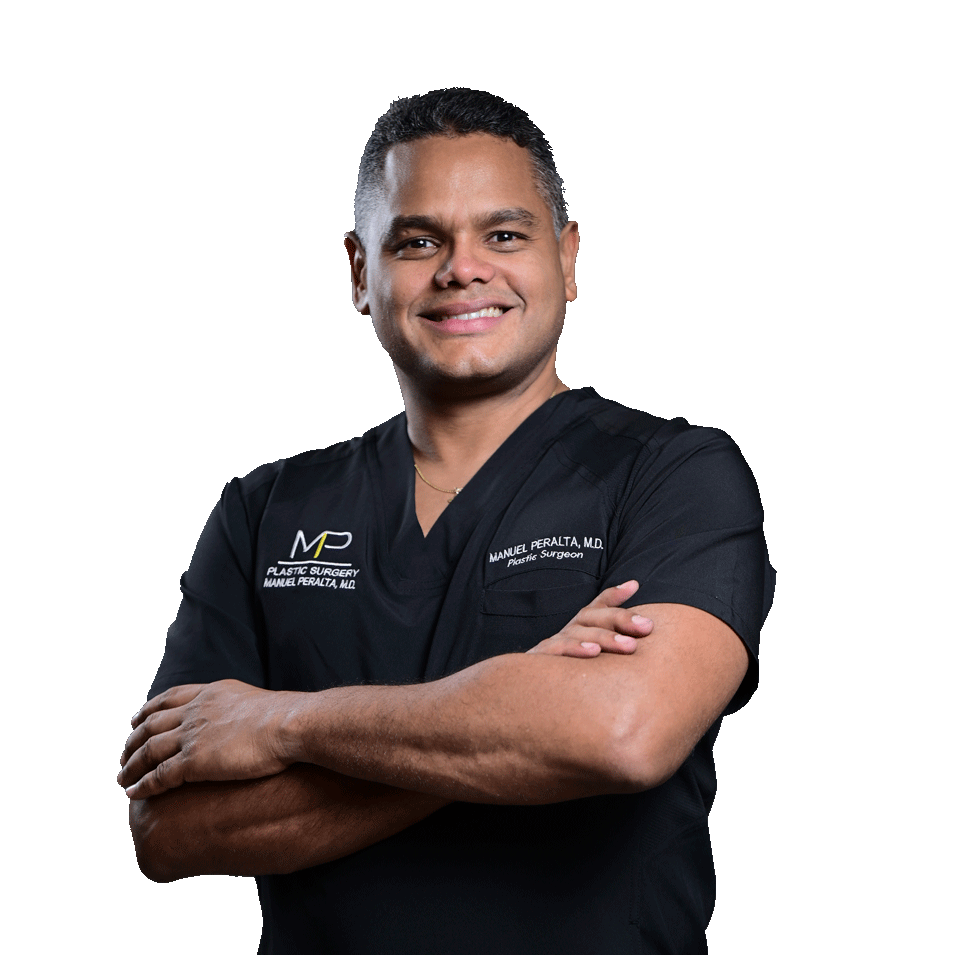
DR. MANUEL PERALTA
PLASTIC SURGEON

Rhinoplasty Dominican Republic — The Architectural Approach of Dr. Manuel Peralta
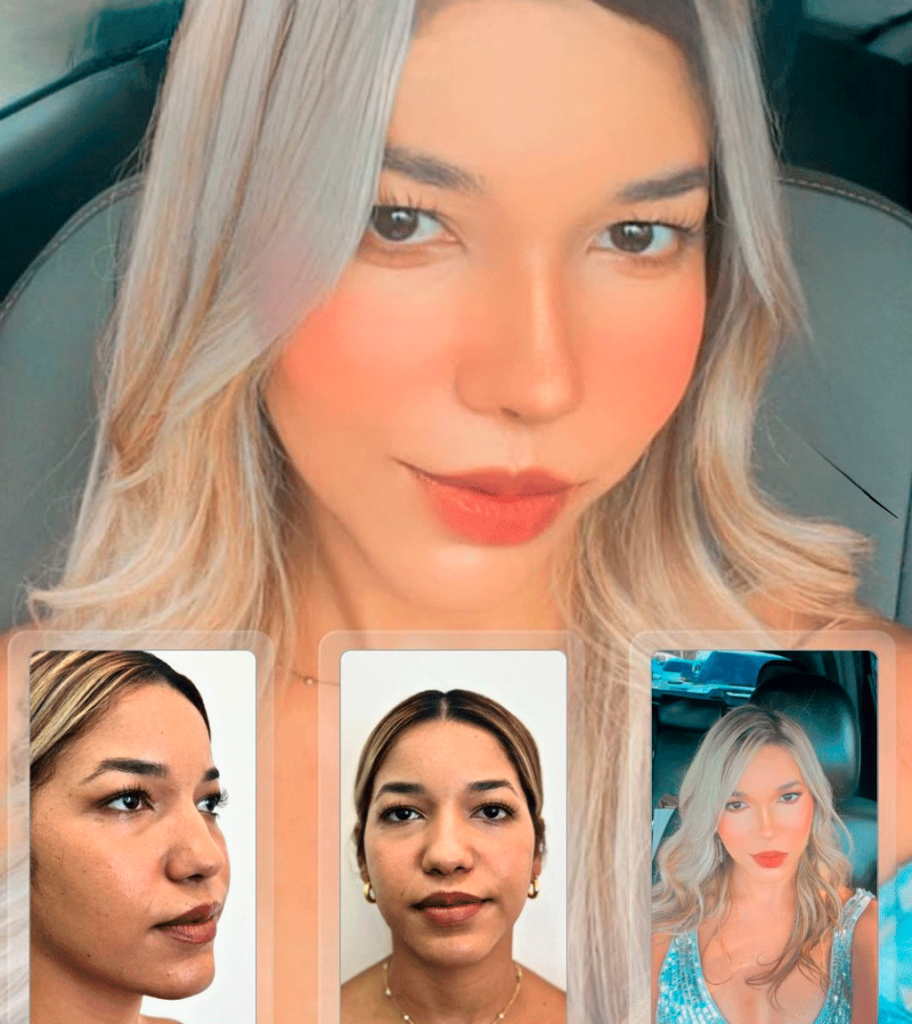
Rhinoplasty Dominican Republic patients who achieve the most natural, lasting results share a common experience: their nose does not look operated.
It looks like their nose only better. More balanced. More harmonious with the rest of the face. Visible from every angle without revealing the intervention that produced it.
That outcome demands more from the surgeon than any other plastic surgery procedure. The nose is the only facial feature that must be aesthetically resolved simultaneously from the frontal view, the lateral profile, the three quarter angle, and the base view four completely different geometric relationships, each capable of revealing a surgical error that the other three might conceal.
Dr. Manuel Peralta’s approach to rhinoplasty Dominican Republic surgery at CECILIP is built on his Cleveland Clinic fellowship training in facial surgery one of the most technically demanding rhinoplasty programs in the world and his deep understanding of the nasal characteristics most commonly presented by Latin American and Caribbean patients.
Why the Cleveland Clinic Fellowship Makes the Difference in Rhinoplasty
Most plastic surgery credentials matter across procedures. The Cleveland Clinic fellowship matters most specifically for rhinoplasty.
Rhinoplasty is universally recognized as the most technically demanding procedure in facial plastic surgery. The margin for error is measured in millimeters. The healing process is unpredictable in ways that other procedures are not. And the result must satisfy a standard that no other procedure faces: simultaneous three dimensional harmony from every viewing angle.
The Cleveland Clinic’s rhinoplasty program exposes surgeons to a volume and complexity of cases primary rhinoplasty, revision rhinoplasty, functional aesthetic combined procedures, ethnic rhinoplasty that most practitioners will not encounter in years of private practice. The technical standards, the aesthetic frameworks, and the judgment developed in that environment are not replicable through courses or conference attendance.
Rhinoplasty Dominican Republic surgery with Dr. Manuel Peralta at CECILIP is performed by a surgeon whose rhinoplasty training was completed at an institution where the standard for acceptable results is exceptionally high.
The Three Structural Layers of the Nose — What Is Actually Being Modified
Understanding what rhinoplasty changes at each anatomical layer gives patients the framework to evaluate results accurately and set expectations correctly.
Layer 1 The Skin Envelope The skin covering the nose is not passive packaging. It is an active variable that determines how much of the underlying structural changes will be visible in the final result. Thick skin masks refinement structural changes made beneath thick skin may be invisible at the surface. Thin skin reveals everything every irregularity, every asymmetry, every subtle structural decision.
This is the most important layer in rhinoplasty Dominican Republic planning for Latin American and Caribbean patients and the most underexplained.
Layer 2 The Cartilaginous Framework The lower two-thirds of the nose is composed of cartilage: the upper lateral cartilages forming the middle third, and the paired alar (lower lateral) cartilages forming the nasal tip and nostrils. These cartilages determine tip shape, tip projection, nostril width, and the columella (the strip of tissue between the nostrils).
Most of the aesthetic refinements patients seek in rhinoplasty tip definition, nostril reduction, tip deprojection or augmentation are achieved through modifications to this cartilaginous layer.
Layer 3 The Bony Vault The upper third of the nose is formed by the nasal bones the structural bridge visible in the dorsal profile. Patients seeking reduction of a nasal hump, straightening of a deviated bridge, or narrowing of a wide bony base require modification of this layer through controlled osteotomies precisely placed bone cuts that allow the nasal bones to be repositioned.
Every modification in one layer creates consequences in the others. Reducing a dorsal hump changes the relationship between the bony and cartilaginous middle thirds often requiring additional cartilaginous work to maintain structural support and proportion. This interdependency is what makes rhinoplasty technically unforgiving and why surgical experience in its specific anatomy matters more than in almost any other procedure.
The Ethnic Rhinoplasty Consideration — Latin and Caribbean Nasal Characteristics
Board certification establishes a baseline. Fellowship training elevates a surgeon above it. Dr. Manuel Peralta holds two fellowship level specializations that are exceptionally rare in the Dominican Republic and uncommon globally.
Cleveland Clinic Fellowship — Facial Surgery and Rhinoplasty
The Cleveland Clinic is consistently ranked among the top medical institutions in the world. Fellowship training there is not a certificate course it is full immersion in a high volume, high complexity clinical environment under world class supervision.
Dr. Manuel Peralta completed his Cleveland Clinic fellowship with a focus on facial surgery and rhinoplasty. The nasal structure demands a three dimensional anatomical understanding where millimeters determine whether a result looks natural or operated. The periorbital and facial zones require a depth of aesthetic judgment that clinical volume and supervised mentorship not textbooks transmit.
Every rhinoplasty and facial procedure performed by Dr. Manuel Peralta at CECILIP reflects the protocols and the precision standards of one of the world’s most demanding medical training environments.
Facial procedures informed by Cleveland Clinic training:
- Rhinoplasty primary and revision
- Facelift and facial rejuvenation
- Blepharoplasty (eyelid surgery)
- Facial fat grafting
- Chin and jaw contouring
Prof. Ronaldo Pontes — Body Contouring Specialization
Prof. Ronaldo Pontes is a recognized authority in the Brazilian Society of Plastic Surgery and one of the most respected body contouring specialists in Latin America. Brazil leads the world in body contouring innovation a tradition built on decades of surgical volume, anatomical research and aesthetic refinement.
Training under Prof. Ronaldo Pontes placed Dr. Manuel Peralta directly inside that tradition. The assessment frameworks, technical approaches and the aesthetic philosophy that define elite Brazilian body contouring travel through clinical immersion case by case, in the operating room not through courses or certificates.
Body contouring procedures informed by Prof. Ronaldo Pontes training:
- Liposuction multi area and high definition
- Abdominoplasty full, mini, and extended tummy tuck
- Brazilian Butt Lift (BBL) with current international safety protocols
- Mommy Makeover customized combination procedures
- Body contouring after massive weight loss
The Skin Thickness Variable — The Most Important Factor No One Explains
The single most influential variable in rhinoplasty outcomes is skin thickness and it is the least discussed in patient facing content. Understanding it prevents the most common category of rhinoplasty disappointment.
Why thick skin limits visible refinement
Structural changes made to the cartilaginous tip suturing, excision, grafting create subtle shape modifications beneath the skin envelope. In patients with thin skin, these modifications are visible at the surface with full fidelity. In patients with thick skin, the skin envelope masks the structural changes. The tip may feel different firmer, slightly different in shape but the surface appearance changes less dramatically than the structural modifications would suggest.
This is why the rhinoplasty result a patient sees on a fair-skinned, thin skinned patient in a before and after photo is not directly applicable to what their own result will look like. Skin type determines the transmission of structural changes to the visible surface.
What thick skin can and cannot achieve in rhinoplasty
Thick skin patients can achieve meaningful and satisfying rhinoplasty Dominican Republic results narrowing of the alar base, reduction of dorsal height, improvement in overall proportions. But they require honest expectations about tip refinement specifically: dramatic tip definition visible through thick skin is rarely achievable without over-resection of the underlying cartilage which creates structural weakness and long-term complications.
Dr. Manuel Peralta assesses skin thickness during every rhinoplasty Dominican Republic consultation and provides specific, honest expectations about what the procedure can deliver for each patient’s skin type.
Open vs. Closed Rhinoplasty — The Clinical Decision
The choice between open and closed rhinoplasty is one of the most discussed technical decisions in the procedure and one of the most frequently misrepresented in patient facing content.
Open rhinoplasty An additional small incision across the columella the strip of tissue between the nostrils allows the skin to be lifted entirely off the cartilaginous framework, providing full visual access to all nasal structures. This exposure allows more precise assessment, more complex modifications, and more reliable correction of asymmetries and tip deformities.
The columellar scar when well-placed and properly closed becomes essentially invisible at conversational distance within 6–12 months. The additional healing time required for the columellar incision is modest.
Open rhinoplasty is Dr. Manuel Peralta’s preferred approach for primary rhinoplasties requiring tip work, for complex cases, and for all revision rhinoplasties.
Closed rhinoplasty All incisions are placed inside the nostrils no external scar. The approach provides less exposure than open technique, limiting the complexity of modifications that can be performed reliably. Recovery is marginally faster.
Closed rhinoplasty is appropriate for patients requiring limited, well-defined modifications primarily dorsal reduction or minor bony vault work where full tip exposure is not necessary for the planned corrections.
The decision between open and closed is not a preference it is a clinical assessment of what the surgical plan requires.
Primary vs. Revision Rhinoplasty — Fundamentally Different Procedures
Rhinoplasty Dominican Republic patients seeking revision of a prior procedure require a specific acknowledgment: revision rhinoplasty is not a repeat of the primary procedure. It is a substantially more complex operation performed in fundamentally different anatomical conditions.
Scar tissue from the primary procedure has altered the tissue planes, reduced tissue mobility, and changed the structural relationships between cartilage, skin, and bone. The cartilaginous framework may have been weakened, over resected, or displaced from its original position. Predicting how scar-altered tissue will respond to further modification requires experience specific to revision cases.
Dr. Manuel Peralta performs both primary and revision rhinoplasty at CECILIP. Revision patients are evaluated with the understanding that their case requires a distinct surgical plan not a standard correction and that the goals must be calibrated to what the existing anatomy can realistically achieve after prior intervention.
Rhinoplasty and Nasal Function — The Breathing-Aesthetics Duality
Many rhinoplasty Dominican Republic patients present with both aesthetic concerns and functional issues nasal obstruction, difficulty breathing through one or both nostrils, or chronic congestion related to structural deviation.
Rhinoplasty and septoplasty the surgical correction of a deviated septum are frequently performed in the same surgical session. The septum serves both structural and functional roles: it is the central support structure of the nose and the primary determinant of nasal airway symmetry.
When a deviated septum contributes to both aesthetic asymmetry and functional obstruction, addressing it during rhinoplasty corrects both problems simultaneously and provides additional cartilage graft material for tip and dorsal support work.
Dr. Manuel Peralta evaluates nasal airflow and septal anatomy during every rhinoplasty Dominican Republic consultation identifying functional components that should be addressed in the surgical plan.
Recovery — The Rhinoplasty Timeline Patients Actually Need to Know
“When does the cast come off?” Day 7–10. The external cast or splint applied at the end of surgery is removed at the first follow-up appointment. The nose will be swollen and bruised at this stage — the result visible at cast removal is not the final result.
“When can I go back to work?” Week 1–2 for desk-based roles. Most bruising has faded enough for social comfort by day 10–14. Glasses cannot be worn on the nose for 4–6 weeks — an important practical consideration for glasses wearers.
“When can I fly home?” Day 10–14 for most international patients. Dr. Manuel Peralta assesses healing individually before clearing each patient for travel.
“When will I look normal?” Week 3–4 for most social purposes. Most of the dramatic swelling has resolved. The nose looks presentable — though not yet at its final definition.
“When is the final result visible?” Month 3 for a strong approximation. Month 12 for the true final result. Rhinoplasty has the longest visible swelling timeline of any facial procedure — the nasal tip retains subtle residual edema for up to a full year in some patients, particularly those with thicker skin.
Frequently Asked Questions — Rhinoplasty Dominican Republic
How does skin thickness affect rhinoplasty results?
Thick nasal skin common in Latin American and Caribbean patients masks the structural changes made to the underlying cartilaginous framework. Patients with thick skin can achieve meaningful improvements in overall nasal proportions and alar base width, but should have realistic expectations about tip definition specifically. Dramatic tip refinement visible through thick skin requires over-resection that creates structural weakness. Dr. Manuel Peralta assesses skin thickness during every rhinoplasty consultation and provides specific outcome expectations for each patient’s skin type.
What is ethnic rhinoplasty and does Dr. Manuel Peralta perform it?
Ethnic rhinoplasty refers to rhinoplasty planning that respects and preserves the patient’s heritage while achieving aesthetic goals appropriate to their facial type. For Dominican Republic patients, this typically involves addressing wider alar bases, lower dorsal height, thicker skin, and less projected tips while producing results that look natural to the patient’s features, not borrowed from a different facial type. Dr. Manuel Peralta discusses ethnic rhinoplasty goals explicitly during every consultation at CECILIP.
What is the difference between open and closed rhinoplasty?
Open rhinoplasty adds a small columellar incision that allows the skin to be lifted entirely off the cartilaginous framework, providing full exposure for complex modifications. Closed rhinoplasty uses internal incisions only, limiting access but leaving no external scar. Dr. Manuel Peralta selects the approach based on the specific corrections required open for complex tip work and all revision cases, closed for limited bony modifications where full exposure is not necessary.
Can rhinoplasty improve nasal breathing at the same time?
Yes. Rhinoplasty and septoplasty are frequently combined in a single surgical session when a deviated septum contributes to both aesthetic asymmetry and functional nasal obstruction. Dr. Manuel Peralta evaluates nasal airflow and septal anatomy during consultation and incorporates functional correction into the surgical plan when indicated.
Why is revision rhinoplasty more complex than primary?
Revision rhinoplasty is performed in anatomical conditions fundamentally altered by the prior procedure scar tissue, reduced tissue mobility, potentially weakened or displaced cartilage, and unpredictable healing responses. It requires a distinct surgical plan, different techniques, and outcomes calibrated to what the existing altered anatomy can realistically achieve. Dr. Manuel Peralta performs revision rhinoplasty at CECILIP and evaluates revision patients with the understanding that their case demands a different clinical approach.
When is the final rhinoplasty result visible?
The nose has the longest visible swelling timeline of any facial procedure. Most dramatic swelling resolves by week 3–4. The result at month 3 is a strong approximation of the final outcome. The true final result including full resolution of tip edema is established at month 12, particularly in patients with thicker nasal skin.
How long do I need to stay in Dominican Republic after rhinoplasty?
Most international patients remain for 10–14 days following rhinoplasty Dominican Republic surgery. The cast or splint is removed at day 7–10 and Dr. Manuel Peralta assesses healing before clearing each patient individually for travel.
Schedule Your Rhinoplasty Consultation with Dr. Manuel Peralta
Rhinoplasty Dominican Republic at its highest level is not reduction it is resolution. The architectural resolution of a three dimensional structure that must satisfy a standard of harmony no other facial feature demands.
Dr. Manuel Peralta’s Cleveland Clinic fellowship training and his deep familiarity with the nasal characteristics most commonly presented by Dominican and Latin American patients make CECILIP the reference destination for rhinoplasty in the Caribbean.
The consultation is where the plan begins with your anatomy, your heritage, your goals, and an honest assessment of what your nose can become.
Get a free consultation