DR. MANUEL PERALTA
PLASTIC SURGEON

Breast Reduction Dominican Republic — From Physical Burden to Functional Freedom
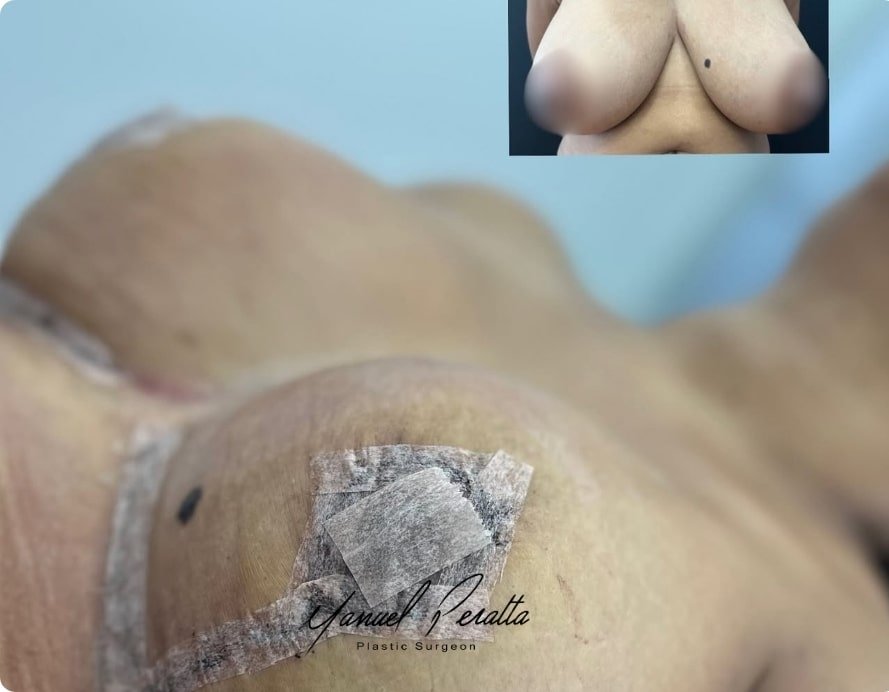
Breast reduction Dominican Republic is one of the few plastic surgery procedures that is simultaneously a functional medical intervention and an aesthetic transformation. Most procedures change how you look. Breast reduction changes how you move, how you sleep, how you exercise, how you stand, and for many women how you feel about yourself in every room you enter.
Dr. Manuel Peralta performs breast reduction Dominican Republic patients travel specifically to CECILIP in Santo Domingo to access because his clinical framework begins where the patient’s daily experience begins: not with the aesthetic goal, but with the physical burden.
The size of the reduction required, the technique best suited to the patient’s anatomy, and the outcome that will genuinely improve quality of life are all determined by a thorough evaluation of the patient’s specific situation not by a generic protocol applied uniformly.
Table of Contents
What Makes Breast Reduction Dominican Republic Different whit Dr Manuel Peralta
The standard of breast reduction Dominican Republic patients encounter at CECILIP is defined by three clinical commitments that separate Dr. Manuel Peralta’s practice from a high volume surgical center:
- Every consultation is conducted personally by Dr. Manuel Peralta not a coordinator or sales representative
- Every surgical plan accounts for the patient’s individual anatomy, asymmetry, and functional goals
- Every technique decision pedicle selection, incision pattern, reduction volume is explained to the patient before surgery begins
These commitments produce a different category of result. Not just smaller breasts a body that functions differently.
The Biomechanical Reality of Breast Hypertrophy
When breast tissue exceeds what the body’s musculoskeletal system can support without compensation, a cascade of physical consequences follows. Most patient facing content describes these consequences superficially. The clinical reality is more specific and more significant.
Cervical spine loading The weight of hypertrophic breast tissue shifts the body’s center of gravity forward, creating chronic anterior load on the cervical spine. The neck and upper back muscles compensate with sustained contraction producing the chronic neck tension and headaches that many women with large breasts accept as a permanent feature of their lives. This is not inevitable. It is biomechanical, and it is reversible through breast reduction Dominican Republic surgery with Dr. Manuel Peralta.
Thoracic postural adaptation The forward weight of large breasts recruits a protective postural response: rounded shoulders, forward head position, and thoracic kyphosis. Over years, this adaptation becomes structural. Breast reduction removes the ongoing mechanical cause, allowing physical therapy and conscious retraining to work where they previously could not.
Inframammary skin pathology The chronic moisture, friction, and occlusion beneath hypertrophic breasts creates a reproducible pattern of skin breakdown intertrigo, folliculitis, and recurrent fungal infection in the inframammary fold. These conditions are not cosmetic inconveniences. They are chronic, recurrent, and in many cases refractory to topical treatment as long as the underlying mechanical cause persists.
Bra strap groove formation Bra straps carrying the full weight of hypertrophic breasts create chronic compression of the trapezius and levator scapulae muscle bellies producing the painful shoulder grooves that deepen progressively with age as skin loses elasticity.
Understanding the biomechanical specificity of breast hypertrophy reframes the decision: breast reduction Dominican Republic is not about wanting to look different. It is about wanting to function without limitation.
The Clinical Decision Framework — Reduction, Lift, or Both?
One of the most common questions women bring to consultation is whether they need breast reduction, a breast lift, or a combination of both. The answer is determined by two independent variables: volume and position.
Volume refers to how much breast tissue is present relative to what creates symptoms and what the patient’s frame can support comfortably.
Position refers to where the breast and nipple areola complex sit relative to the inframammary fold the clinical measurement of ptosis (sagging).
The decision matrix:
Excess volume + adequate nipple position → Breast reduction alone Patients with significant volume creating physical symptoms but with the nipple positioned at or above the inframammary fold do not require a lift component. The reduction itself repositions the breast mound and nipple as volume is removed and the breast is reshaped.
Adequate volume + nipple below the inframammary fold → Breast lift (mastopexy) alone Patients whose primary concern is sagging position rather than size who are comfortable with their volume but want restored position are candidates for mastopexy without significant tissue removal.
Excess volume + nipple below the inframammary fold → Breast reduction with lift component The most common presentation for breast reduction Dominican Republic patients at CECILIP. Both volume and position require surgical correction. Dr. Manuel Peralta addresses both simultaneously.
Minimal excess volume + significant ptosis → Discussion required Patients who feel their breasts are “too big” primarily because of sagging not true hypertrophy may find that a lift without reduction produces the aesthetic change they were seeking. Dr. Manuel Peralta evaluates this distinction during consultation and presents both options transparently.
The Asymmetry Opportunity — What Most Consultations Miss
Breast asymmetry is the rule, not the exception. The vast majority of women presenting for breast reduction Dominican Republic surgery have measurable differences in volume, position, nipple height, or breast base width between sides.
Breast reduction is the most powerful opportunity in elective surgery to correct breast asymmetry. Because tissue is being removed from both sides, Dr. Manuel Peralta can calibrate the reduction differentially removing more from one side than the other to produce a symmetric result that may be significantly more balanced than the patient’s pre surgical anatomy.
This correction is planned, measured, and executed deliberately. Dr. Manuel Peralta documents pre operative asymmetry measurements and incorporates differential reduction into the surgical plan from the beginning. For many patients, the correction of asymmetry they had carried for decades is among the most emotionally significant outcomes of their breast reduction Dominican Republic procedure.
Pedicle Selection — Why Blood Supply Determines Everything
The technical core of breast reduction is the pedicle the segment of breast tissue that maintains blood supply and nerve connections to the nipple areola complex throughout the procedure. Pedicle selection determines three critical outcomes: nipple survival, nipple sensation, and breastfeeding capacity.
Superior or superomedial pedicle Dr. Manuel Peralta’s preferred approach for most breast reduction Dominican Republic cases.
Routes blood supply and nerve connections from above and medially preserving the medial sensory nerve branches most responsible for nipple sensation across a wide range of reduction volumes.
Inferior pedicle Routes supply from below. Widely used for large volume reductions. Provides reliable nipple survival in very large breasts but carries somewhat higher risk of sensation change compared to superomedial techniques.
Free nipple graft Used only when the reduction volume required is so large that maintaining a viable pedicle is not technically feasible. Permanent sensation loss is a known consequence. Dr. Manuel Peralta discusses this transparently when it applies it is the exception, not the standard.
Patients who prioritize breastfeeding capacity and nipple sensation should discuss pedicle selection explicitly during consultation. This is the most consequential technical decision in breast reduction surgery.
The Timing Question — Weight Loss, Pregnancy, and When to Proceed
“Should I lose weight first?”
Significant post-operative weight loss generally more than 20 pounds can affect the volume and position of the reduced breasts. If a patient is actively progressing toward a substantial weight loss goal, waiting until weight is stable produces a more durable breast reduction Dominican Republic result.
However, breast tissue responds to weight change individually. Some patients find that weight loss does not significantly reduce breast volume their breasts are predominantly glandular rather than fatty making the wait counterproductive. Dr. Manuel Peralta evaluates breast composition during consultation and provides an individualized recommendation on timing.
“I may want to have children. Should I wait?”
Pregnancy and breastfeeding can change breast size and position after reduction mammoplasty. Patients certain they want more children and for whom breastfeeding is non negotiable may benefit from waiting until their family is complete. Patients for whom current physical symptoms are significantly impacting quality of life should weigh that burden against a future uncertainty. This is an individual decision and Dr. Manuel Peralta presents all the clinical information needed to make it without pressure in either direction.
Recovery — Mapped to What Patients Actually Need to Know
“When does the pain stop?” Days 2–4. The acute discomfort resolves significantly by day 3 with appropriate medication management.
“When can I raise my arms normally?” Week 2–3. Reaching above shoulder height is restricted for the first 10–14 days to protect incision closure.
“When can I fly home?” Day 10–12 for most international patients. Breast reduction requires a slightly longer in-country stay than augmentation because wound monitoring is more involved during the first week.
“When do I go back to work?” Week 2–3 for desk-based roles. Week 5–6 for physically demanding work.
“When can I exercise?” Walking from day 3. Light lower body at week 4. Upper body and high impact at week 6–8, cleared by Dr. Manuel Peralta at follow up.
“When is the final result visible?” Month 3 gives a strong indication. Month 6 is the definitive result. Scars continue maturing for 12–18 months.
The Real Cost — Including What Insurance Doesn't Cover
In the United States and Canada, breast reduction is sometimes covered by health insurance when medical necessity is documented. The documentation process is lengthy, coverage decisions are inconsistent, and even approved patients frequently face $3,000–$6,000 in out of pocket costs through deductibles, copayments, and unreimbursed facility fees.
Dr. Manuel Peralta’s all inclusive breast reduction Dominican Republic Package costs are customized and depend on the complexity of each case: covering surgeon’s fee, board certified anesthesiologist, surgical facility, all in country follow up appointments, and virtual follow up after returning home.
for international patients who purchase all inclusive packages based on their request and budget, the total cost of the surgical trip flights, 5–7 nights accommodation, local transportation remains below the out of pocket cost of the same procedure in the United States, with or without insurance.
Frequently Asked Questions — Breast Reduction Dominican Republic
How do I know if I need a breast reduction or just a breast lift?
The distinction is determined by volume and position. If your breast volume is creating physical symptoms pain, grooves, skin breakdown breast reduction Dominican Republic surgery is indicated. If your primary concern is sagging without excess size, a lift may be sufficient. Dr. Manuel Peralta evaluates both variables during consultation.
Will I be able to breastfeed after breast reduction?
Breastfeeding capacity depends on the pedicle technique used and individual anatomy. Dr. Manuel Peralta uses pedicle approaches designed to preserve milk duct integrity whenever possible. Many patients breastfeed successfully after reduction mammoplasty. This should be discussed specifically during consultation if breastfeeding is a priority.
What happens to nipple sensation after breast reduction?
Most patients experience temporary changes in nipple sensation that resolve within 3–6 months. Permanent changes are uncommon with superomedial pedicle technique. Cases requiring free nipple graft carry higher risk of permanent change disclosed transparently when applicable.
Should I lose weight before getting a breast reduction?
If you are actively progressing toward significant weight loss more than 20 pounds waiting until weight is stable produces a more durable result. Dr. Manuel Peralta evaluates breast composition during consultation and provides a personalized timing recommendation.
How is breast asymmetry addressed during reduction?
Dr. Manuel Peralta documents pre operative asymmetry measurements and incorporates differential reduction into the surgical plan calibrating tissue removal from each side to produce a symmetric result. For many patients this correction is among the most significant outcomes of the procedure.
How long do breast reduction results last?
The tissue removed does not return. Significant weight gain, pregnancy, and aging will affect the breasts over time but the fundamental volume reduction and correction of ptosis are durable. Most patients maintain their results for decades.
Is breast reduction in Dominican Republic as safe as in the United States?
Safety is determined by the surgeon’s qualifications, the facility’s accreditation, and the protocols in place. Dr. Manuel Peralta operates within a fully accredited facility at CECILIP with a board-certified anesthesiologist at every procedure and comprehensive pre and post-operative protocols.
How long do I need to stay in Dominican Republic after breast reduction?
Most international patients remain for 10–12 days after breast reduction surgery. This window allows for wound monitoring, drain removal if applicable, and the critical early follow-up that confirms healing is progressing correctly before travel home.
Schedule Your Consultation
Breast reduction Dominican Republic with Dr. Manuel Peralta begins with a conversation about what your body carries, what you want back, and what your anatomy makes possible. The clinical evaluation is thorough, the recommendations are honest, and the plan is yours.
Schedule your free consultation at CECILIP and take the first step toward a body that moves the way you want it to.
Schedule your free consultation → | Breast augmentation → | View all procedures →
Get a free consultation